Part 5 of the Schema-Aware EF Core Migrations series. This post provides the conceptual foundation that makes Parts 1-4 click.
After four blog posts and countless hours debugging, I finally understand why EF Core schema handling is so confusing: it's actually two separate systems that happen to share some code. Once you see them as distinct, everything else falls into place.
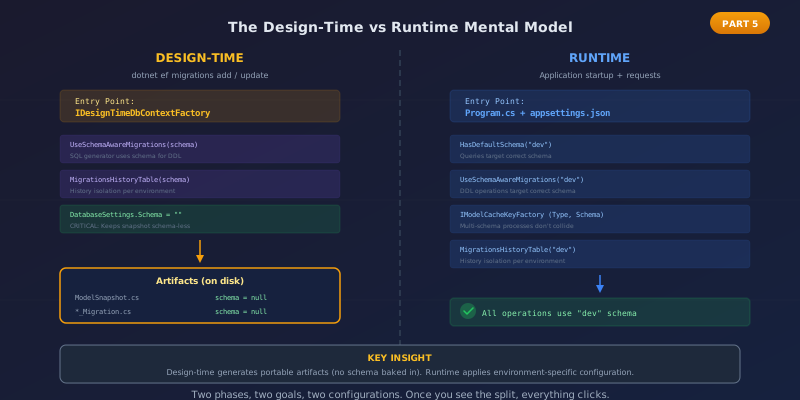
The Two Worlds of EF Core
EF Core operates in two completely different contexts:
┌─────────────────────────────────────────────────────────────────┐
│                      DESIGN-TIME                                │
│  When: dotnet ef migrations add, dotnet ef database update      │
│  Who runs it: Developer CLI, CI pipeline                        │
│  Entry point: IDesignTimeDbContextFactory                       │
│                                                                 │
│  Outputs:                                                       │
│  ├── Migration files (*.cs)                                     │
│  ├── Snapshot file (ApplicationDbContextModelSnapshot.cs)       │
│  └── SQL commands executed against database                     │
└─────────────────────────────────────────────────────────────────┘

┌─────────────────────────────────────────────────────────────────┐
│                       RUNTIME                                   │
│  When: Application startup, web requests, background jobs       │
│  Who runs it: Kestrel, IIS, container                           │
│  Entry point: Program.cs / Startup.cs                           │
│                                                                 │
│  Operations:                                                    │
│  ├── MigrateAsync() - applies pending migrations                │
│  ├── Queries (SELECT, INSERT, UPDATE, DELETE)                   │
│  └── Model comparison (pending changes detection)               │
└─────────────────────────────────────────────────────────────────┘
The key insight: These two worlds can have completely different configurations. Your IDesignTimeDbContextFactory and your Program.cs are separate code paths. If they don't agree on schema handling, you get mysterious failures.
What Gets "Baked In" Where
Here's what confused me for days: some things are determined at design-time and stored in files, while others are determined fresh at runtime.
Baked into Files at Design-Time
| Artifact | What's Stored | When Created |
|---|---|---|
ApplicationDbContextModelSnapshot.cs |
Full model structure, including HasDefaultSchema() if called |
dotnet ef migrations add |
*_Migration.cs files |
Migration operations (CreateTable, AddColumn, etc.) | dotnet ef migrations add |
Determined Fresh at Runtime
| Operation | When Determined | Configuration Source |
|---|---|---|
| Which schema to query | Every database operation | HasDefaultSchema() in OnModelCreating |
| Which schema to create tables in | MigrateAsync() execution |
SchemaAwareMigrationsSqlGenerator |
| Which history table to check | MigrateAsync() execution |
MigrationsHistoryTable() option |
| Model cache key | First context creation per schema | IModelCacheKeyFactory |
The Schema Flow Diagram
Here's how schema flows through both phases:
DESIGN-TIME (dotnet ef migrations add)
══════════════════════════════════════

  DesignTimeDbContextFactory
           │
           ▼
  ┌─────────────────────────────┐
  │ DatabaseSettings.Schema     │◄─── Should be EMPTY for snapshot
  │ (passed to DbContext)       │     to stay schema-less
  └─────────────────────────────┘
           │
           ▼
  ┌─────────────────────────────┐
  │ OnModelCreating()           │
  │ HasDefaultSchema(_schema)   │◄─── Only called if schema non-empty
  └─────────────────────────────┘     (we want to SKIP this at design-time)
           │
           ▼
  ┌─────────────────────────────┐
  │ ApplicationDbContext-       │
  │ ModelSnapshot.cs            │◄─── Saved to disk - schema-less!
  │ ToTable("Users", null)      │     Works for ALL environments
  └─────────────────────────────┘


RUNTIME (Application startup + MigrateAsync)
════════════════════════════════════════════

  Program.cs / appsettings.json
           │
           ▼
  ┌─────────────────────────────┐
  │ DatabaseSettings.Schema     │◄─── REAL schema: "dev", "stg", "prod"
  │ (from configuration)        │
  └─────────────────────────────┘
           │
           ├──────────────────────────────────────┐
           ▼                                      ▼
  ┌─────────────────────────────┐    ┌─────────────────────────────┐
  │ OnModelCreating()           │    │ SchemaAwareMigrations-      │
  │ HasDefaultSchema("dev")     │    │ SqlGenerator                │
  │                             │    │ Rewrites: CREATE TABLE      │
  │ For: SELECT, INSERT, etc.   │    │ [dev].[Users]               │
  └─────────────────────────────┘    └─────────────────────────────┘
           │                                      │
           ▼                                      ▼
  ┌─────────────────────────────┐    ┌─────────────────────────────┐
  │ Runtime Model               │    │ Database Tables             │
  │ (cached per schema)         │    │ Created in [dev] schema     │
  └─────────────────────────────┘    └─────────────────────────────┘
The Six Components Mapped to Phases
Now the six components make sense when you see which phase each one serves:
| # | Component | Phase | Problem It Solves |
|---|---|---|---|
| 1 | HasDefaultSchema() |
Runtime | Queries target correct schema |
| 2 | Empty schema at design-time | Design-time | Snapshot stays schema-less |
| 3 | MigrationsHistoryTable() |
Both | Each schema tracks its own migrations |
| 4 | SchemaAwareMigrationsSqlGenerator |
Runtime | DDL operations target correct schema |
| 5 | IModelCacheKeyFactory |
Runtime | Multi-schema processes don't collide |
| 6 | MigrationHelper.Environment |
Design-time | Seed scripts use correct schema |
Notice the split:
- Design-time only: #2, #6
- Runtime only: #1, #4, #5
- Both phases: #3
The Common Trap: Why Cache Key Factory Seems Complete
When you first hit PendingModelChangesWarning, you'll find advice to implement IModelCacheKeyFactory. It seems to work at first because:
- You're running locally with schema "local"
- The snapshot was generated with schema "local" (because you ran migrations locally)
- Model comparison passes because they match
Then CI fails because:
- CI runs with schema "dev"
- The snapshot still has "local" baked in
- Model comparison fails: "local" ≠ "dev"
The cache key factory prevents runtime cache collisions between different schemas in the same process. It does NOT prevent snapshot comparison failures.
┌─────────────────────────────────────────────────────────────────┐
│  What IModelCacheKeyFactory DOES solve:                         │
│                                                                 │
│  Process creates context with "dev" schema                      │
│       │                                                         │
│       ▼                                                         │
│  Cache key: (ApplicationDbContext, "dev", false)                │
│       │                                                         │
│       ▼                                                         │
│  Later, creates context with "stg" schema                       │
│       │                                                         │
│       ▼                                                         │
│  Cache key: (ApplicationDbContext, "stg", false)  ◄── Different!│
│                                                                 │
│  No collision. Each gets its own cached model.                  │
└─────────────────────────────────────────────────────────────────┘

┌─────────────────────────────────────────────────────────────────┐
│  What IModelCacheKeyFactory does NOT solve:                     │
│                                                                 │
│  Snapshot file on disk:                                         │
│    HasDefaultSchema("local")                                    │
│    ToTable("Users", "local")                                    │
│       │                                                         │
│       ▼                                                         │
│  Runtime model (in CI):                                         │
│    HasDefaultSchema("dev")                                      │
│    ToTable("Users", "dev")                                      │
│       │                                                         │
│       ▼                                                         │
│  EF Core compares them BEFORE caching                           │
│       │                                                         │
│       ▼                                                         │
│  "PendingModelChangesWarning" - models don't match!             │
└─────────────────────────────────────────────────────────────────┘
The Real Solution: Schema-Less Snapshots
The fix is elegant once you understand the two phases:
At design-time: Pass empty schema to DatabaseSettings. This prevents HasDefaultSchema() from being called in OnModelCreating. The snapshot is generated without any schema, using ToTable("Users", (string)null).
At runtime: Pass the real schema. HasDefaultSchema() runs, queries work correctly. The SchemaAwareMigrationsSqlGenerator rewrites DDL to target the correct schema.
// DesignTimeDbContextFactory.cs - DESIGN-TIME
public ApplicationDbContext CreateDbContext(string[] args)
{
    var schema = GetSchemaFromEnvironment();  // "dev", "stg", etc.

    optionsBuilder.UseSqlServer(connectionString, sql =>
        sql.MigrationsHistoryTable("__EFMigrationsHistory", schema));

    optionsBuilder.UseSchemaAwareMigrations(schema);  // SQL generator uses schema

    // CRITICAL: Empty schema for DatabaseSettings
    // This keeps HasDefaultSchema() from polluting the snapshot
    var databaseSettings = Options.Create(new DatabaseSettings { Schema = string.Empty });

    return new ApplicationDbContext(optionsBuilder.Options, databaseSettings);
}

// Program.cs - RUNTIME
builder.Services.AddDbContext<ApplicationDbContext>(options =>
{
    var schema = configuration["Database:Schema"];  // Real schema from config

    options.UseSqlServer(connectionString, sql =>
        sql.MigrationsHistoryTable("__EFMigrationsHistory", schema));

    options.UseSchemaAwareMigrations(schema);
    options.ReplaceService<IModelCacheKeyFactory, SchemaAwareModelCacheKeyFactory>();
});

// DatabaseSettings gets the REAL schema at runtime
builder.Services.Configure<DatabaseSettings>(config => config.Schema = schema);
Tests: The Exception to the Rule
Tests need the real schema for queries to work, but they compare against the schema-less snapshot. This creates an expected mismatch.
The solution: Log the warning instead of throwing.
// In test fixtures
optionsBuilder.ConfigureWarnings(w =>
    w.Log(RelationalEventId.PendingModelChangesWarning));
This is safe because:
- The warning is expected (schema-less snapshot vs schema-aware runtime)
- Migrations apply correctly via
SchemaAwareMigrationsSqlGenerator - The warning is logged for visibility, not silently suppressed
The Mental Model Checklist
Before you debug a schema issue, ask:
- Which phase is failing? Design-time (
dotnet ef) or runtime (application)? - What's in the snapshot? Check
ApplicationDbContextModelSnapshot.csfor hardcoded schemas - What's the entry point?
DesignTimeDbContextFactoryorProgram.cs? - Are both phases configured identically? (They shouldn't be for schema handling!)
Summary: The Two-Phase Architecture
┌─────────────────────────────────────────────────────────────────┐
│                    DESIGN-TIME                                  │
│  Goal: Generate schema-less artifacts                           │
│                                                                 │
│  ✓ UseSchemaAwareMigrations(schema) - for SQL generation        │
│  ✓ MigrationsHistoryTable(schema) - for history isolation       │
│  ✓ Empty DatabaseSettings.Schema - keeps snapshot clean         │
│  ✓ MigrationHelper.Environment - for seed scripts               │
└─────────────────────────────────────────────────────────────────┘

┌─────────────────────────────────────────────────────────────────┐
│                      RUNTIME                                    │
│  Goal: Apply schema to all operations                           │
│                                                                 │
│  ✓ HasDefaultSchema(schema) - for queries                       │
│  ✓ UseSchemaAwareMigrations(schema) - for DDL                   │
│  ✓ MigrationsHistoryTable(schema) - for history isolation       │
│  ✓ IModelCacheKeyFactory - for multi-schema processes           │
│  ✓ Real DatabaseSettings.Schema - from configuration            │
└─────────────────────────────────────────────────────────────────┘
The two phases have different goals. Design-time generates portable artifacts. Runtime applies environment-specific configuration. Once you internalize this split, EF Core schema handling becomes predictable.
Schema-Aware EF Core Migrations series:
- Schema-Aware EF Core Migrations - The custom SQL generator approach
- The MigrationsHistoryTable Bug - Why history table schema matters
- Hardening Schema Migrations - Tests that let you sleep at night
- The Model Cache Key Factory - Preventing false PendingModelChangesWarning
- The Design-Time vs Runtime Mental Model - Why schema handling is actually two systems (this post)
Want the no-jargon version? Read the ELI5: Why Your Database Needs Colored Folders.