Every novel has an origin story. Mine started with a superhero game.
The Video Game Character
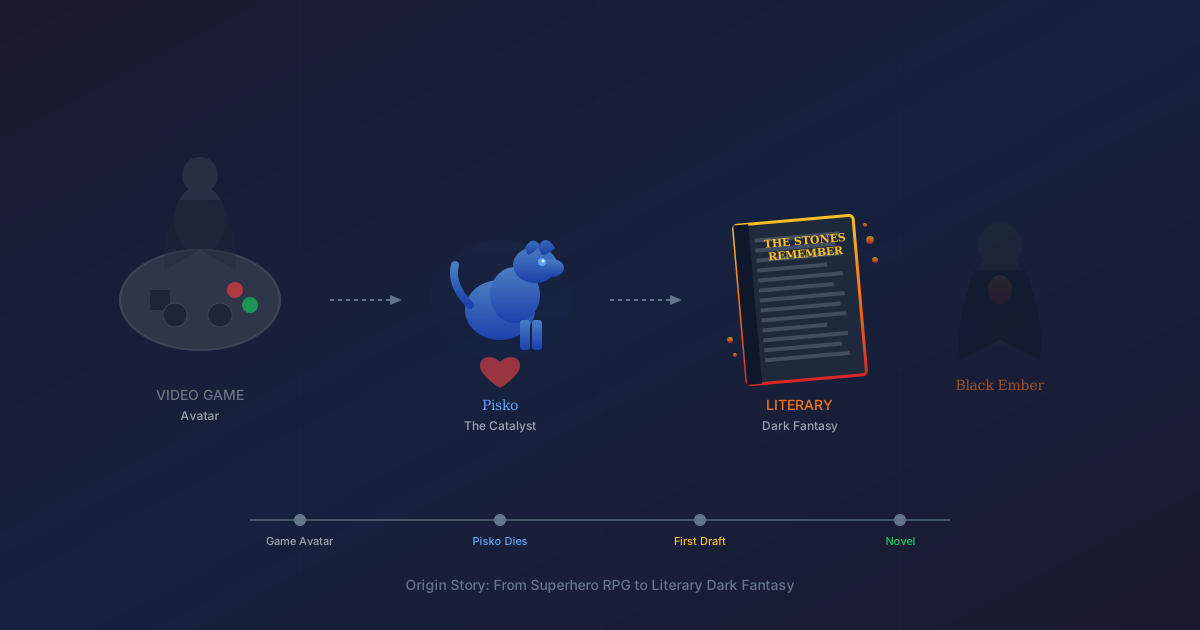
I needed an avatar name for a superhero RPG. Something that sounded cool, had presence, captured a specific aesthetic I was going for.
I landed on: Black Ember.
The concept was pure comic book—an Irish vigilante hero, sort of a Batman/The Legend/Darkman/Moon Knight blend. Dark, atmospheric, operating in shadows, dispensing harsh justice to people who deserved it. The fire inside him was literal supernatural power. The Irish setting gave it Gothic atmosphere.
It was fun. It was exactly what the game needed.
And then my dog died.
When Everything Changed
Pisko wasn't just a dog. He was quiet observation personified. He would sit for hours, watching, seeming to understand more than he could express. When he died, I felt the loss of that patient witness—someone who saw everything and judged nothing.
I found myself thinking about Black Ember differently.
What if the vigilante had a witness? What if there was a spectral hound who followed him, recording everything, hoping he'd find a different path than the one violence offered?
Taibhse entered the story. The hound of memory. Patient. Silent. Waiting across centuries for someone to get it right.
Suddenly this wasn't a superhero game anymore.
The First Chapters
Here's what I wrote in May 2025—the very first rough attempt at turning this game concept into a novel:
He sat in the bar with his back to the fire. The pint was half gone, and he didn't remember starting it. The tourists had all wandered off into the night like sheep let loose from a pen, full of whiskey and stories and the kind of wonder that comes easy to people who've never lived with ghosts.
Even in this earliest version, you can see the elements that would survive:
- Seamus as possessed tour guide
- The fire burning inside him
- The mysterious linen cloth
- Irish setting and atmosphere
- That spare, poetic prose style
- Tourists as contrast to darker reality
But look at what was different:
May 2025 version: Seamus has no memory of who he was. The linen is a complete mystery to him. He's contemplating walking into the bog to die. The fire is clearly a separate entity. There's no hope—just dark supernatural violence against people who deserve it.
It was The Crow meets Constantine. Atmospheric and compelling, but ultimately nihilistic.
The Evolution
Over the next seven months, something fundamental shifted.
The vigilante justice scenes stayed (you'll meet them in the final novel), but they stopped being the point. Instead, they became evidence of something more complex—choices that feel righteous in the moment but carry consequences Seamus doesn't expect.
The fire stopped being a separate entity and became universal human experience amplified—that spike of righteous anger we all feel when someone wrongs us.
The linen evolved from mystery object to something with purpose and history—but what that means unfolds across the novel.
Characters appeared who didn't exist in May: people who challenge Seamus's isolation, people who mirror his struggles in different ways, people who refuse to let him face this alone even when he pushes them away.
The story stopped being about one man's dark journey and became about what happens when you can't save yourself alone.
What Stayed True
Despite all these changes, the core remained:
A man possessed by judgment, fighting forces he barely understands, trying desperately to be left alone while the world demands he engage.
That vigilante from the superhero game? He's still in there. But now he's exhausted, reluctant, and learning that harsh justice without mercy just feeds the demon.
Batman became something more like The Green Mile's John Coffey—someone with terrible power who's learning that the real strength is choosing not to use it.
Why This Matters for Writers
Your first concept is rarely your final story.
That video game avatar was permission to start. It gave me a character, a setting, a tone. But the actual novel emerged through:
- Personal loss (Pisko's death adding Taibhse)
- Thematic questions (What does judgment without mercy create?)
- Character complexity (Seamus as reluctant, not heroic)
- Structural discovery (Integration, not elimination, breaks the cycle)
- Cultural authenticity (Celtic mythology grounding the supernatural)
I didn't plan this evolution. I discovered it by writing, getting feedback, revising, writing more, and staying open to what the story was trying to become.
The May 2025 Draft
Here's the thing about those first three chapters I wrote in May: they're not bad.
The prose works. The atmosphere is there. Seamus is compelling. The supernatural elements create intrigue.
But they're a different novel—one about retribution and darkness, not integration and mercy.
Finishing the book required honoring what worked while transforming what didn't. The voice stayed. The vigilante scenes stayed (repositioned and recontextualized). The Irish Gothic atmosphere stayed.
Everything else evolved.
From Game Character to Tribute to Novel
So here's the full origin story:
- Superhero game needs avatar → Black Ember (vigilante concept)
- Dog dies → Taibhse enters (witness/hope element)
- First draft → Atmospheric but nihilistic (May 2025)
- Thematic depth → Integration vs. elimination (Sept-Oct 2025)
- Cultural grounding → Celtic mythology framework (Oct 2025)
- Structural completion → Full three-act draft (Nov 2025)
- Voice restoration → Marrying early atmosphere with late structure (Dec 2025)
Each step built on the last. Each transformation honored what came before while pushing toward something deeper.
What This Became
The Stones Remember is no longer a superhero origin story. It's literary dark fantasy about:
- Self-condemnation and the impossibility of self-mercy alone
- Cancel culture and the lack of grace in modern discourse
- Breaking 500-year cycles through accepting help
- One man's tribute to a patient dog who deserved remembering
It's also still about an Irish vigilante with fire in his chest and a spectral hound following him through the dark.
Both things are true. Neither erases the other.
Lesson learned: Your story's origin doesn't limit its destination. A video game character can become literary fiction. A vigilante can become a study in mercy. A tribute to a dog can become a novel about breaking cycles of judgment.
Start wherever inspiration strikes. The real story will reveal itself through the writing.
This post is part of a series about writing my novel. See also: For Pisko on completing the novel and honoring the dog who inspired it, Celtic Gods Are Messy on the mythology framework, and The Stones That Remember on the worldbuilding breakthrough.