I was camping in Northern Wisconsin, reading Marcus Aurelius by firelight, when it hit me: my stone circles needed to do more than witness. They needed to act.
The Setup Problem
In my draft, ancient Irish stone circles served as settings—atmospheric backdrops where important scenes happened. They were described beautifully (I hoped), but they were essentially fancy furniture.
The stones witnessed events and recorded them in spiral carvings. That was it.
Functional, but not transformative.
The Philosophy Connection
Here's what Marcus Aurelius wrote that broke something open:
"The universe is change; our life is what our thoughts make it."
I'd been thinking about my protagonist's journey as individual—one man learning to forgive himself. But Irish mythology doesn't work that way. The land itself is conscious. Sovereignty is about relationship with place, not just internal transformation.
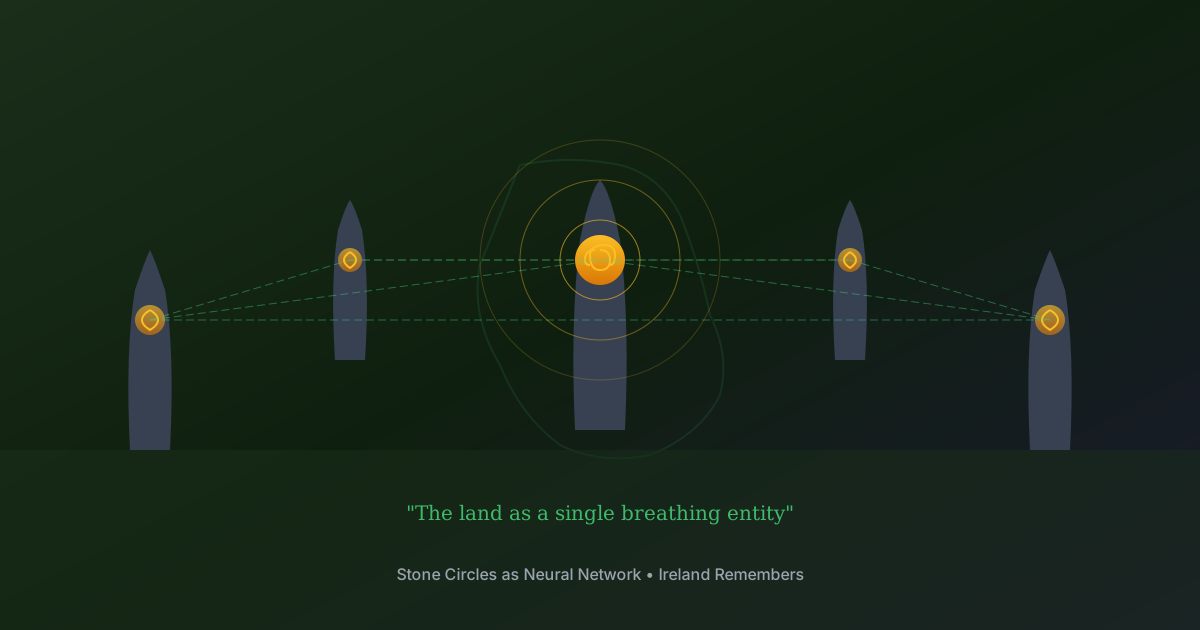
What if the stones weren't just recording one man's journey? What if they were connected—a network across Ireland, like neurons in a vast consciousness?
The Research That Validated It
I dove back into Celtic mythology and found exactly what I needed: Irish sacred sites have ALWAYS been understood as interconnected. The ancient Irish didn't see stone circles as isolated monuments. They were nodes in a living landscape, places where the veil between worlds grew thin.
Ley lines. Sacred geography. The land as a single breathing entity.
This wasn't me inventing something convenient. This was me finally understanding what Irish people have always known.
The Breakthrough
So here's what changed: When my protagonist finally achieves integration—learning to hold both judgment and mercy simultaneously—it's not just his story. The pattern he creates gets broadcast across the entire stone network.
Every ancient stone in Ireland records it. Simultaneously.
Fishermen in Donegal see spirals appear on coastal megaliths. Hikers in Kerry watch patterns burn into sacred sites. Archaeologists in Dublin document the impossible.
An intimate story about self-forgiveness becomes a moment of cultural healing, witnessed by the land itself.
Why This Matters for Worldbuilding
Here's the craft lesson: Your setting should be as active as your characters.
Don't just describe where things happen. Ask:
- What does this place want?
- What has this place witnessed?
- How does this place respond to events?
- What role does geography play in theme?
In my story, the Irish landscape isn't backdrop—it's a character with agency, memory, and judgment of its own. The stones don't just remember. They decide what matters enough to record.
That changes everything.
The Practical Application
When I revised with this understanding, entire scenes shifted. Instead of Seamus traveling TO stone circles, the circles began pulling him. Instead of him performing actions AT sacred sites, the sites began collaborating—or resisting.
The land became an active participant in every choice.
Lesson learned: Sometimes your biggest breakthroughs come when you step away from the keyboard and let your subconscious work. Read philosophy. Go camping. Let the pieces connect in firelight. Then bring that understanding back to the page and let it transform everything.
This post is part of a series about writing my novel. See also: Celtic Gods Are Messy on moral complexity in mythology, and How Black Ember Began on the journey from video game avatar to literary fiction.