I was listening to an audiobook about Celtic paganism when the narrator mentioned something that stopped me cold: there are over 400 deities in the Celtic tradition.
And none of them are purely good or evil.
The Problem I Didn't Know I Had
I'd been treating my supernatural forces like a clear binary:
- The Ember = Bad (judgment, destruction, demon)
- The Linen = Good (mercy, healing, salvation)
Hero chooses good over evil. Story complete. Right?
Except this felt shallow. I wanted moral complexity, but I'd built a moral seesaw.
What Celtic Mythology Taught Me
Here's what that audiobook revealed:
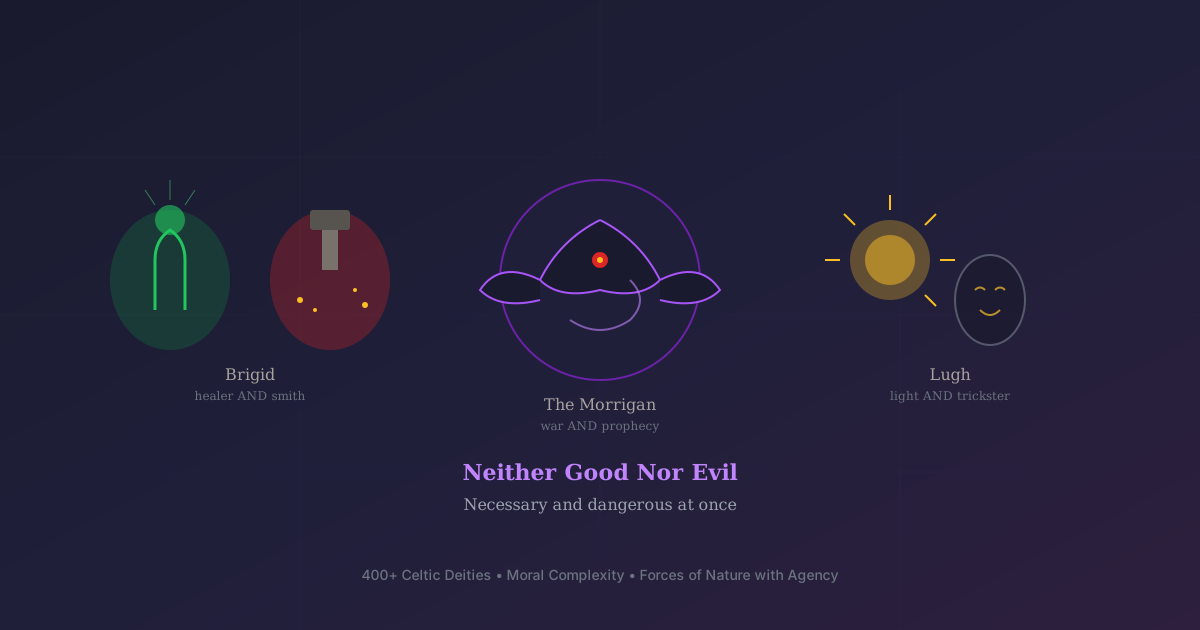
The Morrigan (goddess of war) brings both prophecy AND chaos. She's not evil—she's necessary. War isn't moral failing; it's transformation through destruction.
Lugh (god of light) is both light-bringer AND trickster. He illuminates truth but also deceives. Both aspects are essential to his nature.
Brigid (goddess of healing) is also the goddess of smithcraft—she heals AND she forges weapons. Creation and destruction in the same hands.
Celtic deities aren't moral exemplars. They're forces of nature with agency. They contain contradictions because reality contains contradictions.
The Permission I Needed
This gave me permission to completely reconceptualize my supernatural forces:
They're not opposing forces. They're flawed partners who forgot how to work together.
The ember isn't evil—it's judgment without mercy, which becomes demonic. But judgment itself? Necessary. Some actions deserve condemnation. Some people need to be stopped.
The linen isn't pure good—it's mercy without justice, which enables harm. But mercy itself? Essential. Everyone deserves compassion. Everyone can change.
The demon isn't evil destroying good. It's an ancient entity amplifying what humans already do: judge without grace, condemn without understanding, isolate rather than connect.
The Craft Revision
This changed how I wrote every scene. Instead of:
The evil ember tried to make him cruel. The good linen tried to make him kind.
I wrote:
Heat built—that righteous clarity when someone deserves exactly what's coming. Cold pressed—that recognition of shared suffering, that both things could be true at once. Judgment AND mercy. Neither complete without the other.
Why This Matters Beyond Mythology
Even if you're not writing fantasy, this principle applies: Moral complexity isn't about "shades of gray." It's about holding contradictions without resolving them.
Your antagonist isn't pure evil—they're pursuing something they believe is good through methods that cause harm.
Your protagonist isn't pure good—they're trying to help but also causing damage, often to the people they love most.
The world isn't broken into teams. It's full of people with legitimate grievances making terrible choices, people with good intentions causing real harm, people with ugly pasts trying genuinely to change.
The Celtic Framework
Celtic mythology understands something modern culture often forgets: transformation comes through integration, not elimination.
You don't defeat the Morrigan—you learn to work with her. You don't avoid Lugh's trickery—you learn to see the truth it reveals. You don't choose Brigid's healing over her forging—you accept she is both.
Lesson learned: The best mythology reflects messy human truth, not clean moral lessons. Give yourself permission to write forces that are neither good nor evil but necessary and dangerous at once. Your story will be richer for it.
This post is part of a series about writing my novel. See also: The Stones That Remember on turning setting into character, and Finding the Voice on grounding the supernatural in universal human experience.