This month I did something that sounds insane: I completed NaNoWriMo (50,000+ words of new draft) while simultaneously doing deep structural revisions on earlier chapters.
I don't recommend this for everyone. But it taught me something crucial about my process.
The Discovery
I write FAST and MESSY. My first drafts are:
- ✅ Atmospheric and lyrical
- ✅ Emotionally resonant
- ✅ Strong voice and prose
- ❌ Full of plot holes
- ❌ Missing crucial setup
- ❌ Characters doing things for unclear reasons
Then I revise for structure and lose ALL the voice. My revision drafts are:
- ✅ Logically sound
- ✅ Well-paced
- ✅ Clear cause and effect
- ❌ Flat prose
- ❌ Over-explained
- ❌ Lost the magic
The Pattern I Finally Recognized
This has happened on every major project. I thought I was just bad at maintaining consistency. But watching myself work on two different parts of the same novel simultaneously, I realized what's actually happening:
First drafts: I'm discovering the story by writing it. The prose is alive because I'm surprised by what happens.
Revisions: I already know what happens. The prose dies because I'm just fixing mechanical problems.
The Solution
Stop trying to maintain voice while discovering story OR fix structure while preserving voice. They're different modes requiring different approaches.
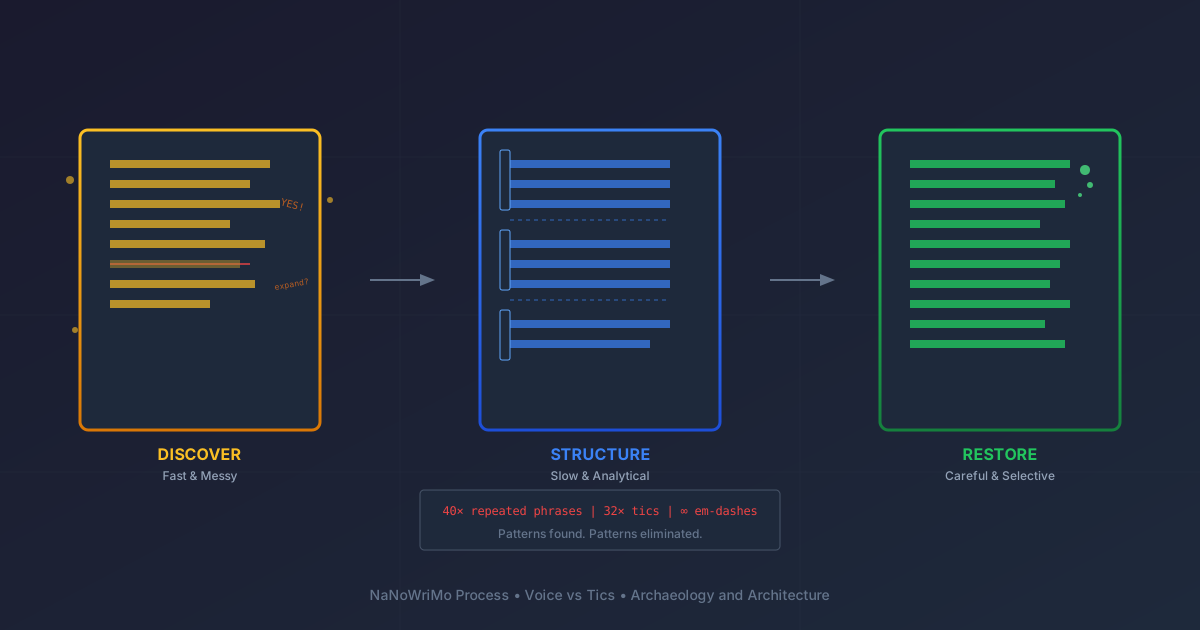
Phase 1: Discover (fast, messy)
- Write the full draft
- Follow the energy
- Don't worry about consistency
- Learn what story you're actually telling
- Complete the arc start to finish
Phase 2: Structural Revision (slower, analytical)
- Fix plot holes
- Clarify motivations
- Improve pacing
- Ensure proper setup/payoff
- Make the mechanics work
Phase 3: Voice Restoration (careful, selective)
- Take the atmospheric prose from early chapters
- Take the solid structure from late chapters
- Marry them scene by scene
- Preserve the magic while keeping the mechanics
The Brutal Stats
This week alone I eliminated:
- 40 instances of "five hundred years" (I was leaning on this phrase as a crutch)
- 32 instances of "not X but Y" constructions (a rhythmic pattern that became distracting)
- Countless em-dashes where a period would serve better
These patterns felt good while writing. They created rhythm and flow. But in revision, they became stylistic tics that called attention to themselves.
The Hard Truth About Patterns
Every writer develops favorite constructions. They feel like "your voice." But there's a difference between:
Voice = The unique way you see and express the world Tic = A construction you overuse because it's comfortable
Voice enriches. Tics distract.
The only way to find your tics is to finish a full draft, step back, and search for patterns. What phrase appears 40 times? That's not style anymore—that's laziness wearing style's clothing.
What NaNoWriMo Teaches
The genius of NaNoWriMo isn't about producing publishable work. It's about producing enough work that you can see your patterns.
You can't identify your crutch phrases in 20 pages. You need 50,000+ words before the patterns emerge clearly enough to name.
Fast drafting isn't about being sloppy. It's about generating enough material that revision becomes possible.
The Revision Philosophy
I used to think revision meant "making the draft better." Now I understand it means:
- Discover what story you told (not what you planned to tell)
- Identify what works (voice, scenes, emotional beats)
- Identify what doesn't (plot holes, weak structure, overused patterns)
- Rebuild systematically (keeping the good, fixing the broken)
It's archaeology and architecture combined. Uncover what you created. Then rebuild it to showcase what matters.
Lesson learned: Your first draft teaches you what you're writing. Your revisions teach you how to write it. Don't try to do both at once. Write fast to discover, revise slow to refine, then marry the best of both. And be ruthless about your patterns—they're either serving the story or serving your comfort.
This post is part of a series about writing my novel. See also: Show, Don't Tell (Even When It Hurts) on trusting your readers, and Finding the Voice on grounding the supernatural in human experience.