My critique partners were kind but honest: "You're explaining too much."
Every time the supernatural forces appeared, I felt compelled to describe exactly what was happening and why. I was terrified readers wouldn't understand.
The Explanation Trap
Here's what I was doing wrong:
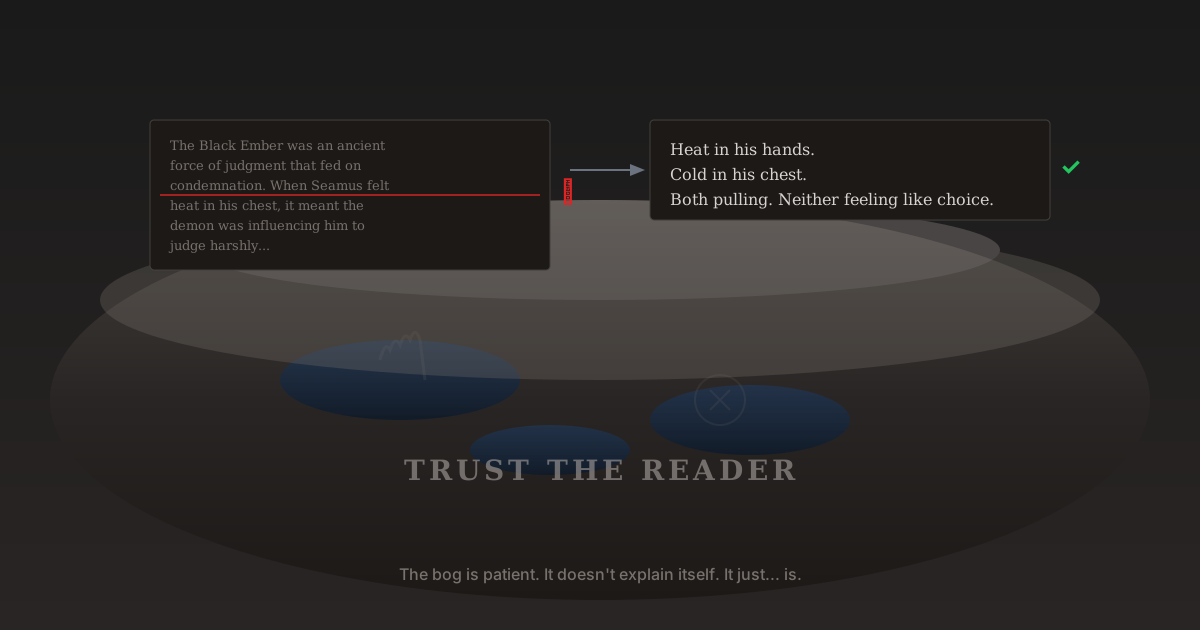
The Black Ember was an ancient force of judgment that fed on condemnation. When Seamus felt heat in his chest, it meant the demon was influencing him to judge harshly. The linen cloth was a counter-force representing mercy, and when he felt cold, it meant...
Stop. Just stop. This is me, the author, not trusting you, the reader.
What My Research Taught Me
I'd been deep in Irish bog country research—reading about bodies preserved for thousands of years in peat, perfect and unchanged. The bogs are patient. They don't explain themselves. They just... are.
My story needed that same patience. Let things rest in the dark until readers are ready to discover them.
The Brutal Revision
I went back through 13 chapters with one rule: If I'm explaining the supernatural forces, cut it.
This meant deleting hundreds of words I'd carefully crafted. It hurt. But here's what happened:
Before:
The heat was the Black Ember trying to make him judge harshly. The cold was the linen offering an alternative. He was caught between two forces, neither fully his own.
After:
Heat in his hands. Cold in his chest. Both pulling. Neither feeling like choice.
Shorter. More visceral. More mysterious. More effective.
The Reader Test
Here's how to know if you're over-explaining:
- Can a reasonably attentive reader figure this out from context? If yes, trust them.
- Does your explanation stop the momentum? If yes, cut it.
- Are you explaining because you're worried about reader confusion or because you're worried about reader judgment? If it's the latter, that's your fear talking, not your story's needs.
What I Learned About Trust
Readers are smart. They're doing work you don't see—making connections, forming theories, testing hypotheses against new information. When you over-explain, you're not helping them. You're robbing them of the pleasure of discovery.
And if they don't figure something out? That's okay! Some mysteries are meant to linger. Some things are better felt than understood.
Lesson learned: Trust your reader. If you've written it well, they'll understand without you holding their hand. And if they don't understand everything immediately, that's not a failure—it's an invitation to keep reading.
This post is part of a series about writing my novel. See also: Finding the Voice on grounding the supernatural in human experience, and Writing Fast, Revising Forever on the revision process.