Someone posted this on LinkedIn the other day, and it's been rattling around in my head ever since:
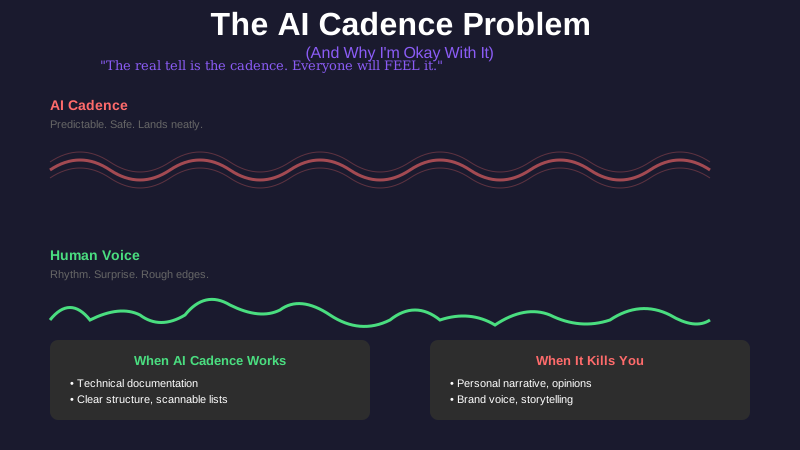
"Everyone claims that the em dash and the 'it's not this, it's that' are the dead giveaways that something was written by ChatGPT. They're wrong. The real tell is the cadence."
They went on to explain that AI has a rhythm — a predictable, safe, explanatory pattern that resolves every tension and lands neatly every time. And that rhythm, no matter how polished the prose, will eventually feel monotonous. Soulless.
They're absolutely right.
And I say this as someone who literally co-authors blog posts with Claude.
The Guilty Conscience Moment
I read that post right after publishing a technical series on memory leak debugging. Three parts. Clean structure. Numbered breakdowns. Em dashes everywhere. The kind of writing that makes you think, "Yeah, this was written by AI."
And you know what? Some of it was.
Here's the thing, though — I'm okay with it. Not because I don't care about voice or rhythm or authenticity. But because context matters.
When AI Cadence Works
I started this blog to externalize my brain. I was tired of burying debugging notes in OneNote, forgetting solutions I'd already found, and re-solving problems I'd solved six months ago.
Someone once told me, "All problems have already been solved by someone, somewhere." That stuck with me. If I'm going to spend a weekend debugging a production memory leak, I might as well document it so the next person (or future-me) doesn't have to.
For that kind of content — technical documentation, step-by-step walkthroughs, debugging narratives — AI cadence is fine. Maybe even better than my natural voice, because:
- Clear structure helps comprehension
- Numbered lists make patterns scannable
- Predictable rhythm = easier to reference later
- "Here's the problem → here's why → here's the fix" is the right pattern
When I'm writing "How I Found Five Missing using Statements in Production," I don't need mythic prose. I need clarity. I need future-me to find the answer in 30 seconds, not wade through stylistic flourishes.
When AI Cadence Kills You
But here's where it gets tricky.
Not everything on this blog is technical documentation. Some posts are opinion pieces. Personal experiences. Meta-commentary like this one.
And those need a human voice.
If I let AI write "Or You Could Actually Learn CSS" — my response to a snarky LinkedIn comment — it would lose the edge. The defensive-but-reasonable tone. The "I'm pushing back, but gently" rhythm that only works because it's my rhythm.
If I let AI write about designing my own business cards in Inkscape, it would sanitize the discovery moments. The "oh shit, the XML editor is actually amazing" realization would become "The XML editor proved to be an efficient workflow enhancement."
No. Just... no.
The Two Types of Writing
I write two kinds of things:
1. Technical documentation (the memory leak series, debugging walkthroughs, code tutorials)
- Goal: Help someone solve a problem quickly
- Voice: Clear, structured, scannable
- AI cadence: Totally fine, maybe even beneficial
2. Personal narrative (opinions, experiences, meta-posts like this)
- Goal: Share perspective, spark discussion, sound like a human
- Voice: Conversational, rough edges, actual personality
- AI cadence: Death
The trick is knowing which one you're writing.
How I Actually Use AI
Here's my process, honestly:
For technical posts:
- I write messy notes during the actual work (debugging, building, investigating)
- Claude helps me structure it into a coherent narrative
- I edit for accuracy and fill in the personal moments
- If it sounds a little "AI-polished," that's fine — it's documentation
For personal posts:
- I draft the core idea and tone myself
- Claude might help with structure or phrasing
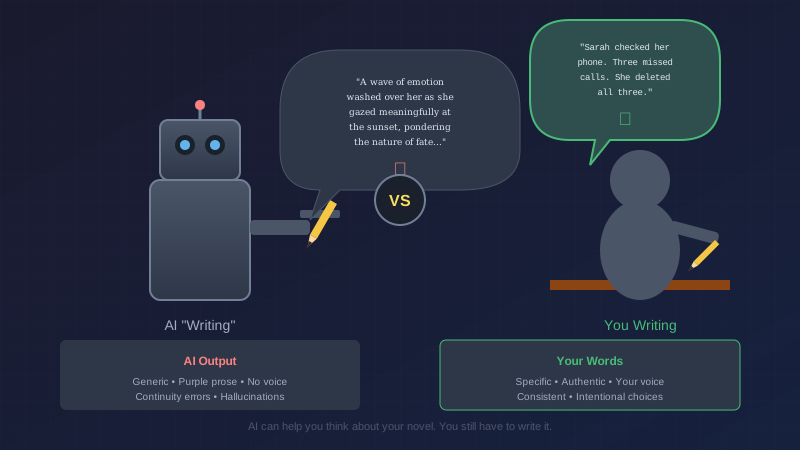
- I rewrite anything that sounds too smooth, too safe, too predictable
- If it doesn't sound like me, it gets rewritten
The test: Read it aloud. If it sounds like I'm reading from a manual, it's wrong (unless it's literally a manual). If it sounds like I'm talking to a friend about something that pissed me off or excited me, it's right.
The Honest Disclosure
Look at the commit messages on this blog's repo. Every post co-authored with Claude has this footer:
Co-Authored-By: Claude Sonnet 4.5 <[email protected]>
I'm not hiding it. I'm not pretending I wrote every word in isolation. AI is part of my writing process the same way spell-check and grammar tools are.
But the ideas are mine. The experiences are mine. The voice — when it matters — is mine.
And when the voice doesn't matter because I'm just documenting how to fix a HttpResponseMessage disposal leak? Yeah, AI cadence is fine.
The Bigger Question
That LinkedIn post ended with this line:
"You're still going to need a human spirit for that."
And they're right. AI won't elevate your brand. It won't make your storytelling stand out. It won't inject soul into your work.
But here's what it will do:
- Help you structure messy thoughts into coherent posts
- Handle the boring parts (formatting, consistency, transitions)
- Let you focus on the parts that actually need your voice
- Get content published instead of sitting in OneNote forever
The question isn't "Should I use AI?" It's "What parts of my writing need ME, and what parts just need clarity?"
The Takeaway
If you're writing to build a personal brand, to tell stories, to stand out — you need your own rhythm. You need rough edges. You need the moments that don't land neatly.
If you're writing to document solutions, share knowledge, help someone solve a problem — AI cadence is fine. Structure is good. Predictability helps.
And if you're doing both (like I am), you need to know which post is which.
I'm about to publish a three-part series on debugging a production memory leak. It probably has AI cadence. Numbered lists, clean structure, em dashes everywhere.
And that's okay. Because six months from now when I forget how IDisposable disposal works, I need to find the answer quickly — not wade through my "unique creative spark."
What do you think? Does AI cadence bother you in technical writing, or just in storytelling? And if you use AI in your writing process, where do you draw the line?
Tags: ai, writing, blogging, meta, opinion, tools, transparency