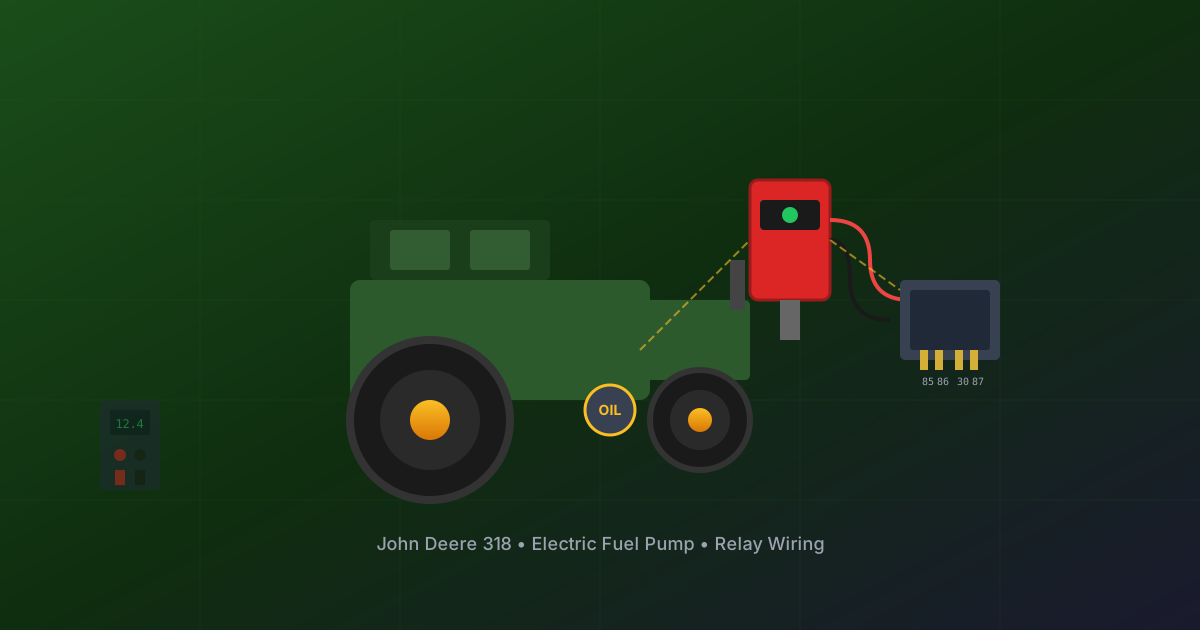
The John Deere 318 with its Onan engine is a reliable machine, but after years of service, the original vacuum fuel pump was failing. Starting required 20+ cranks on a good day. The solution seemed straightforward: install an electric fuel pump.
The installation itself wasn't complicated. The complication was in the wiring.
The Problem with Always-On
An electric fuel pump that runs continuously presents a safety issue. If the engine stalls or dies, the pump keeps pushing fuel - exactly what you don't want. The pump needs to shut off when the engine isn't running.
The obvious solution: tie into the oil pressure switch. When the engine runs, oil pressure builds, and the pump should run. When the engine stops, no oil pressure, no pump.
Simple in theory.
Oil Pressure Switch Reality
The original oil pressure switch on this system doesn't work the way I assumed.
My assumption: switch closes when oil pressure is present, completing the circuit.
The reality: it's a warning light circuit. The switch is normally closed to ground. When there's no oil pressure, the circuit is grounded, and the dash warning light illuminates. When oil pressure builds, the switch opens, breaking the ground path, and the light turns off.
This is the opposite behavior from what I needed for the fuel pump. Wiring the pump directly to this switch would mean the pump runs when the engine is off and stops when it's on.
The Solution: Replace the Switch
The key to the whole project was replacing the original oil pressure switch with a Standard Motor Products PS-64. This switch has two critical differences:
- Normally open instead of normally closed - the switch closes (completes the circuit) when oil pressure is present, which is the behavior I actually needed
- Additional terminal - provides a dedicated connection point for the fuel pump circuit, separate from the warning light
With the right switch in place, the wiring logic becomes straightforward.
Adding a Relay
Even with the correct switch, a relay is necessary for two equally important reasons:
1. Automatic Safety Shutoff
This is the core safety feature. If the engine dies for any reason - stalls, runs out of fuel, mechanical failure - the fuel pump needs to stop immediately. The relay makes this automatic:
- Engine running → oil pressure builds → PS-64 switch closes → relay energizes → pump runs
- Engine stops → oil pressure drops → PS-64 switch opens → relay de-energizes → pump stops
No manual intervention required. The pump can't keep running and flooding fuel into a dead engine.
2. Current Isolation
The oil pressure switch, even a 20A-rated one like the PS-64, shouldn't carry the full current draw of an electric fuel pump directly. The relay allows the switch to control only the low-current coil circuit (milliamps), while the relay's internal contacts handle the higher pump current. This extends the life of both components.
Think of a relay as an electrically-operated light switch - a small signal flips the switch that controls a larger load.
Standard automotive relay pinout for reference:
- 85/86: Coil (not polarity sensitive)
- 30: Common
- 87: Normally open
- 87a: Normally closed (if present)
The wiring:
- Oil pressure switch controls the relay coil (low current)
- Relay switches power to the fuel pump (higher current)
- Result: automatic safety shutoff + protected switch contacts
Debugging with a Multimeter
This project forced me to actually learn how to use a multimeter properly. A few lessons:
Floating voltage is real but often meaningless. High-impedance digital multimeters will show small voltages on circuits that aren't connected to anything meaningful. Measuring across two floating points gives you garbage. Measure relative to a known ground.
Warning light circuits behave differently than you expect. The oil pressure "sender" isn't sending a positive signal - it's providing or breaking a ground path.
Verify ground paths electrically. Don't assume a sensor grounds through its threads into the block. Some do, some don't. Test it.
The Wrong Paths
I used ChatGPT to help troubleshoot during this project. It confidently led me down several incorrect paths, suggesting fixes for problems that didn't exist and misunderstanding the oil pressure switch behavior multiple times. When I finally understood the system myself, I could see where the AI's suggestions would have created new problems or bypassed safety features.
The lesson: AI assistance is useful for brainstorming, but electrical systems require verification. A wrong assumption about how a switch works can mean the difference between a safe installation and a fire hazard.
The Result
The electric fuel pump now:
- Starts with the engine (via relay and oil pressure switch)
- Stops when the engine stops
- Primes briefly when the key is turned to "on" (before cranking)
- Doesn't flood the carburetor or create a fire risk
Starting went from 20+ cranks to reliable first-crank starts.
Parts Used
- Fuel Pump Kit: JDMSPEED Universal Electric Fuel Pump Kit 12V 3-6 PSI - Includes pump, fuel filters, 6.56 ft of 5/16" fuel line, and hose clamps
- Oil Pressure Switch: Standard Motor Products PS-64 - This was the key component. Normally open (closes with oil pressure), 20A rating, with light terminal
- Relay: Standard 12V automotive relay (30A)
Reference Details
For future me (and anyone else working on similar equipment):
Tractor: John Deere 318
Engine: Onan P218G
Original fuel delivery: Vacuum-operated mechanical pump
Original oil pressure switch: Normally closed (warning light style)
Replacement oil pressure switch: Standard Motor Products PS-64 (normally open, 20A)
Fuel pump: 12V electric, relay-controlled
The electrical work took longer than the mechanical installation. That's usually how it goes when you're learning the system as you work on it.